
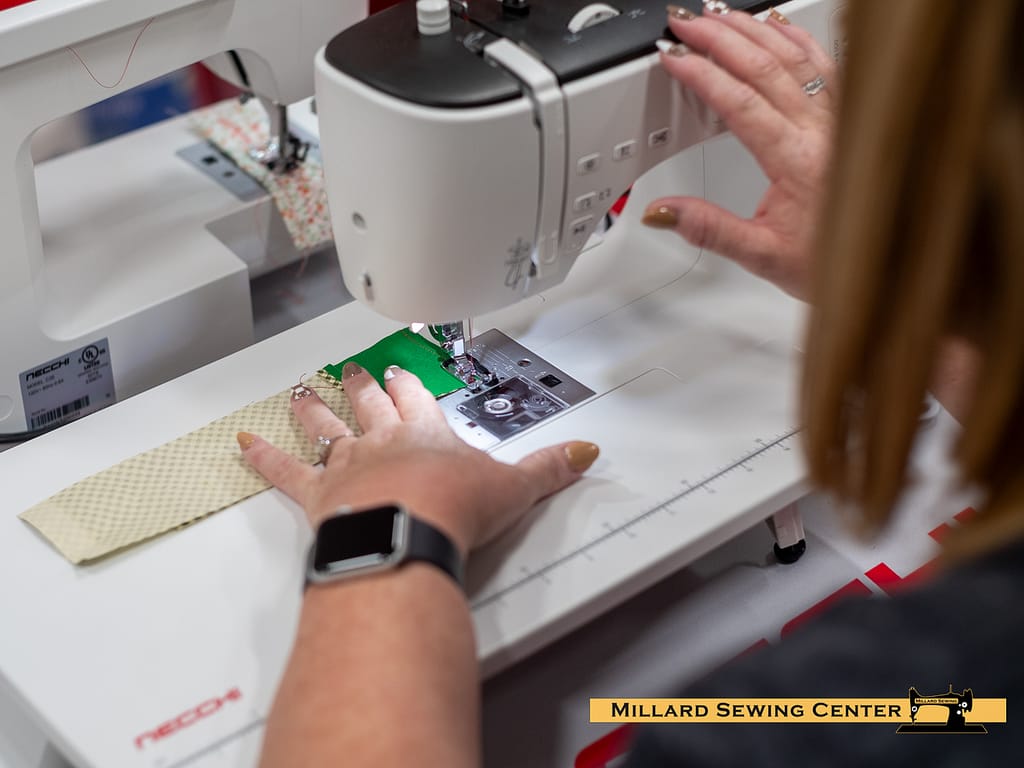
Many sewing problems are caused by small setup mistakes rather than major machine issues. This guide explains common beginner sewing mistakes and how correcting threading, needle setup, bobbin placement, and machine preparation can improve stitch quality and reduce frustration.
Many sewing problems that seem serious are actually caused by small setup mistakes rather than broken machines. Incorrect threading, damaged needles, poor thread quality, or the wrong bobbin can all affect stitch quality and create frustration for beginners. This guide explains some of the most common sewing mistakes and how to troubleshoot them before assuming your machine needs repair.
Threading With The Presser Foot Down
One of the most common beginner sewing mistakes happens before sewing even begins.
Most sewing machines should be threaded with the presser foot raised. Raising the presser foot opens the tension discs so the thread can seat correctly inside the tension system.
If the machine is threaded with the presser foot down:
- The thread may sit outside the tension discs
- Tension may not engage correctly
- Loops may form underneath the fabric
- Stitches may become uneven
If your machine suddenly starts nesting thread underneath the fabric, completely re-threading the machine with the presser foot raised is often the first troubleshooting step.
Using Old Or Poor Quality Thread
Thread quality matters more than many beginners realize.
Cheap, damaged, or old thread may:
- Break easily
- Create excess lint
- Feed unevenly
- Affect tension consistency
- Cause skipped stitches
Thread can also become brittle over time, especially when exposed to heat, sunlight, or humidity.
Fresh quality thread is one of the easiest ways to improve stitch consistency and reduce frustration.
Forgetting To Change The Needle
Sewing machine needles wear out gradually, even when they do not look damaged.
Old needles may:
- Skip stitches
- Damage fabric
- Break thread
- Create uneven stitching
- Make popping sounds while sewing
Many sewists replace needles:
- After large projects
- After hitting pins
- When changing fabric types
- After noticeable stitch problems begin
Using the correct needle type is just as important as using a fresh needle.
Using The Wrong Needle Type
Different needles are designed for different sewing tasks.
Examples include:
- Universal needles
- Quilting needles
- Stretch or ballpoint needles
- Embroidery needles
- Topstitch needles
Using the wrong needle may cause:
- Skipped stitches
- Fabric damage
- Thread shredding
- Poor tension
- Uneven seams
Stretch fabrics, knits, embroidery thread, heavy fabric, and quilting layers often require specialized needles for best results.
Using The Wrong Presser Foot
Not all presser feet are designed for the same task.
Matching the correct Presser Foot and stitch can be critical to have a good outcome.
Using The Wrong Bobbin
Many bobbins look similar while actually having slightly different sizes or shapes.
Using the wrong bobbin style may create:
- Noisy sewing
- Tension problems
- Thread nesting
- Inconsistent stitches
- Machine jams
Always use the bobbin style recommended for your sewing machine whenever possible.
Damaged or bent bobbins should also be replaced.
Pulling Fabric Through The Machine
The sewing machine is designed to feed fabric automatically using the feed dogs underneath the presser foot.
Pulling or forcing fabric through the machine may:
- Bend needles
- Damage timing
- Create uneven stitches
- Break thread
Instead of pulling the fabric:
- Gently guide it
- Allow the machine to feed naturally
- Maintain steady sewing speed
Heavy pulling is especially hard on vintage and lightweight machines.
Sewing Too Fast Too Soon
Many beginners try to sew at full speed immediately.
Slowing down often improves:
- Stitch accuracy
- Fabric control
- Corner turning
- Seam consistency
- Confidence
Fast sewing is useful later, but control is usually more important than speed while learning.
Ignoring Cleaning & Maintenance
Lint, thread pieces, and dust naturally collect inside sewing machines over time.
Excess buildup can affect:
- Tension
- Stitch consistency
- Hook movement
- Bobbin performance
Regular cleaning around:
- The bobbin area
- Feed dogs
- Needle plate
Proper cleaning helps your machine sew more smoothly.
Always check your machine manual before oiling or disassembling parts.
Constantly Adjusting Tension
Many beginners immediately start turning tension dials when stitches look incorrect.
However, tension problems are often caused by:
- Incorrect threading
- Damaged needles
- Poor thread
- Incorrect bobbins
- Lint buildup
Before adjusting tension:
- Replace the needle
- Re-thread the machine
- Check the bobbin
- Clean the bobbin area
- Test with quality thread
In many cases, the original tension setting is actually correct.
Not Testing On Scrap Fabric
Testing stitches on scrap fabric before sewing the final project helps identify problems early.
Testing allows you to:
- Verify tension
- Check stitch length
- Test thread color
- Confirm needle compatibility
- Adjust settings safely
This is especially important when:
- Switching fabrics
- Changing thread types
- Using decorative stitches
- Quilting multiple layers
Beginner Tip
Most sewing machines are far more reliable than beginners think.
If your machine suddenly stops sewing correctly:
- Replace the needle
- Re-thread the machine
- Check the bobbin
- Clean lint buildup
- Slow down and test carefully
Simple setup corrections solve many common sewing problems.
Helpful Supplies For Beginners
A few basic tools can make troubleshooting easier:
- Quality sewing thread
- Fresh sewing machine needles
- Extra bobbins
- Seam ripper
- Thread snips
- Lint brush
- Machine manual
- Small screwdriver set
Related Guides & Resources
Threading Basics For Beginners
Learn proper threading, bobbin placement, and tension basics.
Thread Basics
Understand thread quality, spool setup, and thread types.
Needle Guide
Learn about sewing machine needle types, installation, and troubleshooting.
Sewing Machine Manuals
Find model-specific threading diagrams and machine setup instructions.
Related Resources
Helpful pages to keep learning.
Where To Go Next
Recommended Next Steps