
Choosing the right thread can make sewing and quilting projects smoother, cleaner, and less frustrating—especially for beginners. Good thread helps improve stitch quality, reduces lint buildup, and can prevent many common sewing problems like thread breaks, skipped stitches, and uneven tension. Different thread types are designed for different sewing tasks. While it may seem overwhelming at first, most beginners can successfully start with just a few quality thread options for quilting, garment sewing, embroidery, and everyday sewing projects.
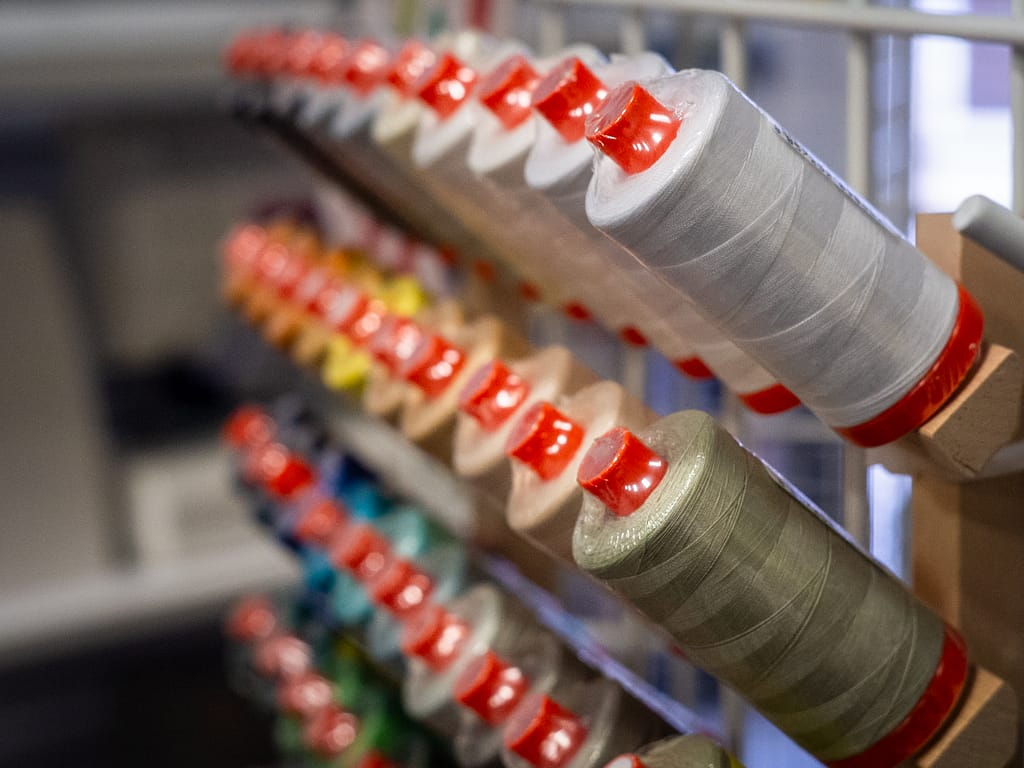
Highlights
- Quality thread helps reduce thread breaks and tension problems
- Different thread types are designed for different sewing projects
- Cotton thread is popular for quilting and piecing projects
- Polyester thread is versatile and works well for many general sewing tasks
- Fresh thread often performs better than old or bargain thread
- Using the correct needle is just as important as choosing good thread
Understanding Sewing Thread Basics
Choosing the right thread can make sewing and quilting projects smoother, cleaner, and less frustrating—especially for beginners. Good thread helps improve stitch quality, reduces lint buildup, and can prevent many common sewing problems like thread breaks, skipped stitches, and uneven tension.
Different thread types are designed for different sewing tasks. While it may seem overwhelming at first, most beginners can successfully start with just a few quality thread options for quilting, garment sewing, embroidery, and everyday sewing projects.
Cotton Thread
Cotton thread is one of the most popular choices for quilting and piecing projects.
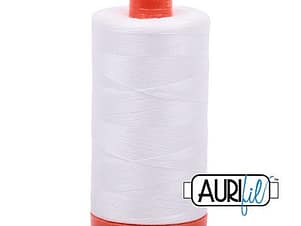 50wt Cotton
50wt Cotton Thread in 2021 Natural White by Aurifil
Now Only $5.49 - $49.95
Why we like it: Reliable cotton thread for piecing, quilting, and general sewing projects.
Best for: Quilters who want a smooth, dependable cotton thread for everyday use.
View Product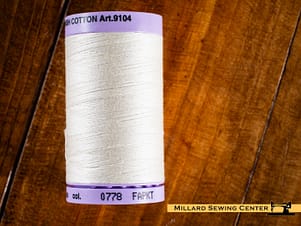 50wt Cotton
Silk Finish 50wt Mercerized Cotton Sewing Thread in 0778 Muslin by Mettler
Now Only $3.49 - $14.95
Why we like it: Smooth cotton thread that works well for quilting, piecing, and sewing cotton fabrics.
Best for: Beginners and experienced quilters who want a versatile cotton thread option.
View Product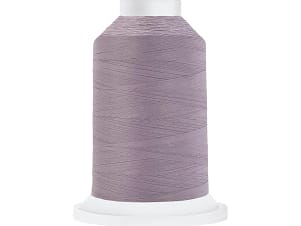 50wt Cotton
50wt Cotton Thread in 40522 Tabriz Orchid by Cairo-Quilt
Now Only $10.95 - $18.95
Why we like it: Egyptian long-staple cotton, Cairo-Quilt is strong & durable, works well for quilting, piecing, and sewing cotton fabrics.
Best for: Beginners and experienced quilters who want a smooth cotton thread option.
View ProductPolyester Thread
Polyester thread is durable, versatile, and works well for many sewing and quilting projects.
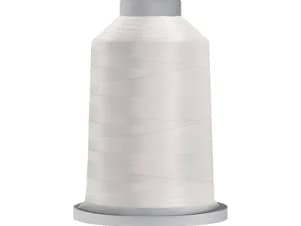 40wt Polyester
40wt Polyester Thread in 10000 White by Glide
Now Only $4.95 - $12.95
Why we like it: Strong polyester thread with a smooth finish and vibrant color options.
Best for: Quilters and sewists looking for durable thread with added strength and sheen.
View Product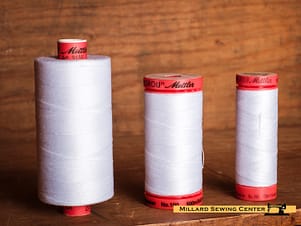 50wt Polyester
Metrosene All Purpose Polyester Sewing Thread in 2000 White by Mettler
Now Only $2.95 - $9.95
Why we like it: Strong polyester thread with a smooth finish and vibrant color options. All-purpose, 100% core-spun thread. It is highly versatile.
Best for: Designed for both hand and machine sewing on various fabrics, including cotton, synthetics, and silk.
View Product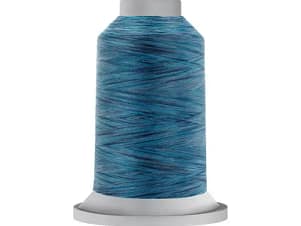 40wt Polyester
Affinity, Polyester Variegated No. 40 in Marine by FilTec
Now Only $16.95 - $31.95
Why we like it: Strong polyester thread, precision-tight one-inch color intervals. Affinity will add flair to all of your top-stitch designs.
Best for: Designed thread with variegated colors that gives a silky sheen and optimum strength
View ProductGeneral Purpose Sewing Thread
General-purpose thread works well for repairs, garment sewing, alterations, and beginner sewing projects.
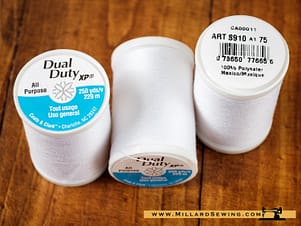 General Purpose
Dual Duty XP 250yds in 0075 Arctic White by Coats & Clark
Now Only $2.95
Why we like it: Classic all-purpose sewing thread designed for repairs, garment sewing, alterations, and everyday projects.
Best for: Beginners looking for easy-to-find, versatile thread for general sewing.
View Product50wt Cotton50wt Cotton Thread in 2021 Natural White by Aurifil
Now Only $5.49 - $49.95
Why we like it: Reliable cotton thread for piecing, quilting, and general sewing projects.
Best for: Quilters who want a smooth, dependable cotton thread for everyday use.
View Product40wt Polyester40wt Polyester Thread in 10000 White by Glide
Now Only $4.95 - $12.95
Why we like it: Strong polyester thread with a smooth finish and vibrant color options.
Best for: Quilters and sewists looking for durable thread with added strength and sheen.
View ProductEmbroidery & Decorative Thread
Decorative sewing threads are designed for embroidery, embellishment, quilting accents, and creative sewing projects.
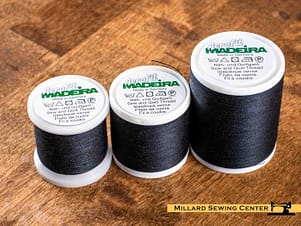 Embroidery & Decorative
Aerofil 40wt Polyester Thread in 8000 Black by Madeira
Now Only $3.49 - $6.49
Why we like it: Smooth embroidery thread designed for decorative stitching, machine embroidery, and embellishment.
Best for: Sewists and embroiderers adding color and decorative stitching to projects.
View ProductSerger & Overlock Thread
Serger thread is designed for high-speed overlock stitching and seam finishing.
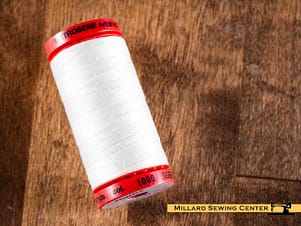 Serger & Garment Sewing
Metrosene All Purpose Polyester Sewing Thread in 1000 Eggshell by Mettler
Now Only $2.95 - $9.95
Why we like it: High-quality polyester thread designed for garment sewing, sergers, and everyday machine sewing.
Best for: Sewists who want smooth feeding thread for garments, apparel sewing, and overlock machines.
View Product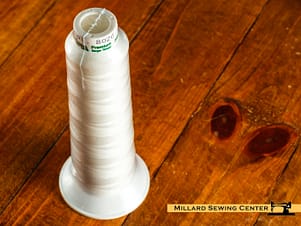 Serger & Garment Sewing
Aerolock Serger Thread 2000yd in Eggshell by Madeira
Now Only $7.95
Why we like it: Top quality, core-spun thread guaranteed to last through frequent washes or strain. Made of 100% core-spun polyester, this thread is perfect for sewing, overlock and coverlock machines
Best for: Sewists who want smooth feeding thread for garments, apparel sewing, and overlock machines.
View Product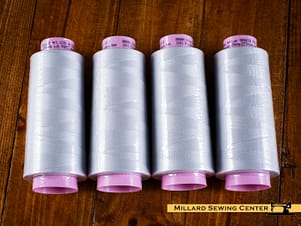 Serger & Garment Sewing
Seracor All Purpose Serger Thread in 0038 Glacier by Mettler
Now Only $10.49 - $34.95
Why we like it: Stretchy and filigree, ideal for borders, more versatile. This is made possible by its special composition: the sewing thread has a strong core around which smooth fibers are spun.
Best for: Masters all classic overlock applications easily. At the same time, the sewing thread is extremely elastic and wonderfully filigree.
View ProductSpecialty Threads
Specialty threads are designed for embroidery, decorative stitching, quilting accents, and creative sewing applications.
Embroidery & DecorativeAerofil 40wt Polyester Thread in 8000 Black by Madeira
Now Only $3.49 - $6.49
Why we like it: Smooth embroidery thread designed for decorative stitching, machine embroidery, and embellishment.
Best for: Sewists and embroiderers adding color and decorative stitching to projects.
View Product40wt Polyester40wt Polyester Thread in 10000 White by Glide
Now Only $4.95 - $12.95
Why we like it: Strong polyester thread with a smooth finish and vibrant color options.
Best for: Quilters and sewists looking for durable thread with added strength and sheen.
View Product 40wt Rayon Core
Glisten, Metallic Wrapped Rayon NO. 40 Thead in 60327 Specter by FilTec
Now Only $8.95
Why we like it: Strong rayon core thread with a metallic finish and vibrant color options. It sews well up to 850 rpm on most commercial embroidery machines.
Best for: Quilters and sewists looking for durable thread with added strength and sheen.
View ProductLearn More
Understanding sewing machine thread is one of the easiest ways to improve stitch quality and reduce frustration. Thread type, spool design, thread weight, and overall quality all affect how smoothly your sewing machine performs. This guide explains beginner-friendly thread basics and helps you understand how thread interacts with your needle, tension system, and fabric.
Understanding Sewing Machine Thread
Most home sewing machines are designed to work with general-purpose sewing thread, but not all thread behaves the same way. Thread varies by:
- Fiber type
- Weight
- Spool design
- Finish
- Intended use
The wrong thread can cause:
- Skipped stitches
- Tension problems
- Thread breaks
- Lint buildup
- Uneven stitches
- Thread nesting underneath fabric
In many cases, simply changing to fresh, quality thread can immediately improve sewing performance.
Polyester vs Cotton Thread
Polyester thread is one of the most common all-purpose sewing threads because it is strong, flexible, and works well on many modern fabrics. It handles stretching and movement better than cotton thread and is often recommended for general garment sewing.
Cotton thread is commonly used for quilting and natural fiber fabrics. Some sewists prefer cotton thread because it presses well and blends naturally into cotton projects.
Neither is automatically better for every project. Fabric type, sewing style, and machine setup all influence which thread performs best.
Why Thread Quality Matters
Low-quality or damaged thread is one of the most common causes of beginner sewing frustration. Cheap thread may contain uneven thickness, weak spots, excess lint, or poor winding that affects stitch consistency.
Old thread can also become brittle over time, especially if it has been exposed to sunlight, heat, or humidity.
Quality thread usually:
- Feeds more smoothly
- Creates more consistent tension
- Produces less lint
- Breaks less often
- Improves overall stitch appearance
If your machine suddenly starts skipping stitches or breaking thread, replacing old thread is often a good first troubleshooting step.
Understanding Thread Weight
Thread weight affects both stitch appearance and machine performance. Different thread brands may use different numbering systems, which can sometimes confuse beginners.
In general:
- Heavier thread creates more visible stitches
- Finer thread creates less noticeable stitching
- Thicker thread may require larger needles
- Decorative thread often needs tension adjustments
Using thread that is too heavy for your needle can cause:
- Thread breaks
- Skipped stitches
- Poor tension
- Needle damage
For most beginner sewing projects, standard all-purpose polyester sewing thread works well.
Why Spool Pin Position Matters
The way thread comes off the spool can affect how smoothly your machine sews. Some thread spools are designed to unwind from the side, while others feed better from the top.
Many modern sewing machines use:
- Horizontal spool pins with spool caps
Many vintage machines use:
- Vertical spool pins
Neither system is automatically better, but the thread spool design and machine setup need to work together properly.
If thread twists, catches, loops, or feeds unevenly:
- Check the spool cap size
- Verify spool orientation
- Try repositioning the spool
- Consider using a thread stand for large cones
Cross-Wound vs Stacked Thread
Some thread spools are wound in a cross-wound pattern while others are stacked evenly around the spool.
Cross-wound thread often feeds best vertically because the thread naturally unwinds from the top without spinning the spool rapidly.
Stacked thread often performs better horizontally with a spool cap controlling the spool movement.
Using the wrong spool orientation can create:
- Bouncing thread
- Twisting
- Uneven tension
- Thread jams
- Inconsistent stitch quality
Specialty Threads
Not all thread is designed for general sewing.
Some common specialty thread types include:
- Embroidery thread
- Quilting thread
- Topstitch thread
- Metallic thread
- Serger thread
- Heavy upholstery thread
Specialty threads may require:
- Larger needles
- Slower sewing speeds
- Tension adjustments
- Special spool handling
Metallic and decorative threads are especially sensitive to tension and thread delivery issues.
Common Beginner Thread Mistakes
Many beginner sewing problems are caused by simple thread setup mistakes.
Common issues include:
- Using old or brittle thread
- Using cheap low-quality thread
- Using the wrong spool cap size
- Threading with the presser foot down
- Using thread that is too heavy for the needle
- Using damaged or bent spool pins
- Mixing incompatible bobbin and upper thread types
Most tension problems should be investigated with fresh thread and a fresh needle before adjusting machine tension settings.
Beginner Tip
If your machine suddenly starts sewing poorly after working correctly before, try:
- Cleaning lint from the bobbin area
- Replacing the needle
- Replacing old thread
- Completely re-threading the machine
These simple steps solve many common sewing problems without needing machine repair.
Helpful Supplies For Better Thread Performance
A few basic sewing supplies can improve thread handling and reduce frustration:
- Quality sewing thread
- Fresh sewing machine needles
- Correct bobbins
- Spool caps in multiple sizes
- Thread snips or scissors
- Lint brush or small cleaning tools
- Thread stand for large cones
Related Resources
Helpful pages to keep learning.
Where To Go Next
Recommended Next Steps