
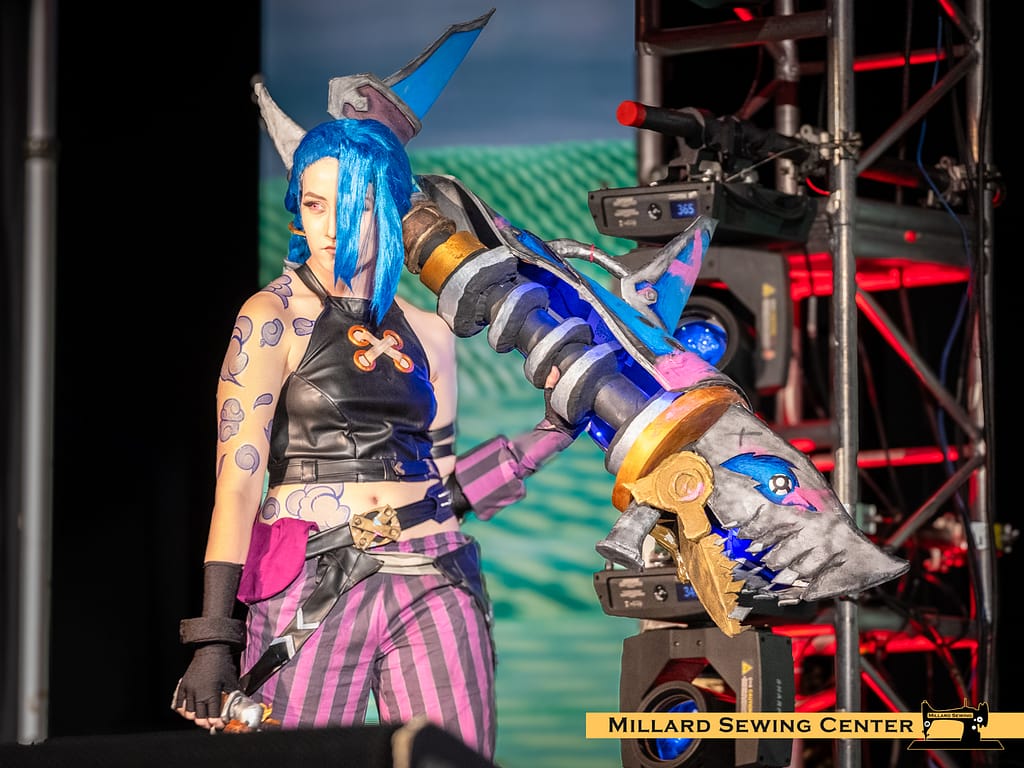
Learn what skills and techniques professional level and competition cosplayers use.
Cosplay competitions and professional cosplayers enter a whole new world of creating. They push themselves to overcome the challenges of replicating characters, and often take it even further. These are a few of the things you can consider when expanding your knowledge and skills into becoming an advanced cosplayer.
1. Authenticity & Historic References
Some characters can have features drawn from historical time periods or real life garments. By understanding the fabrics, techniques, and creation of garments from other time periods and with different resources, you can embrace these challenges and characteristics into your garment. Understanding the time period and references can show a deep understanding of your character.
2. Storytelling Through Design
Character designers have an important job in telling the story of their character through the design of their clothing. As a cosplayer, you don’t have to limit yourself to an animation budget or software, and can develop your chosen character much further. Add more depth to your design and reference more than one episode, a character’s past, towns, cities, antagonists or friends throughout your cosplay.
3. Custom Fabric Design
Many professional cosplayers have dabbled in creating custom fabric designs, or sublimation printing in order to get accurate colors and designs in a 2-D format. By printing custom fabric or sublimation printing fabric, you can get the colors, shapes, and intricate details without adhesives or embellishments. Note that fabric printing and sublimation are not interchangeable as printing involves certain ink and fiber requirements while sublimation printing is only possible on materials containing polyester.
4. Developing Extreme Shapes
Challenging yourself with extreme shapes, silhouettes, and props can set you apart and showcase the development of skills, knowledge, and strategies when facing impossible shapes. Characters like Ahri from League of Legends include these details that can be difficult to recreate in real life. It takes an understanding of characters, materials, and both structural and sewing techniques.
5. Creating Build Books
If you are interested in joining large stage cosplay competitions, build books may be required in the competition guidelines. Unlike notebooks and sketchbooks, these are usually binders or laminated booklets focused on the development of a singular cosplay- some cons may want digital copies as well. It’s important to include your references, high resolution WIP photographs, material swatches, and technique highlights. It is your way to showcase to the judges without your costume being present.
6. Pattern Drafting & Draping
Creating custom patterns and draping fabrics can help get exact fits, and detailed silhouettes. In the development of your cosplay, they are helpful to know how your fabric drapes, and how colors and patterns will work together. Using a dress form allows you to lay your fabrics out. Pattern drafting and draping test your measuring and construction skills for the result of a perfectly fitting cosplay.
7. Fabric Cutting Techniques
The skills you use such as cutting fabric with its grainline, bias, or direction, can give very different results. Cutting on the straight grainline makes sure your fabric retains its shape best and provides more stability. Cutting fabric on the bias (45-degree angle) allows greater stretch and drape in woven fabrics. The direction you cut your fabric is important with patterned fabrics, velvet, and faux fur, as these have an intended direction for them to face.
8. Mastering Utility Stitches
Mastering your sewing machine and what each stitch does is reviewed in the quality and craftsmanship of your cosplay. Sergers and coverstitch machines can produce professional-looking seams and finishes, particularly when working with stretch fabrics. Finishes such as invisible zippers and blind hems showcase your understanding of your sewing machine, and your presser feet. Properly applying these techniques can be important for the structural integrity of your cosplay.
9. Decorative and Top Stitching
Top stitching and decorative details can give detail for the close up viewer to see, but also showcase your attention to detail and knowledge on the character. Clean, consistent topstitching demonstrates control, precision, and an understanding of professional garment construction to judges. Adding decorative stitching can be fun, like adding music notes for characters like Kaede Akamatsu from Danganronpa V3, or Vocaloid characters.
10. Full Machine Capabilities
Machines with embroidery features and a wide array of topstitching and alphabet features can add a lot of fun and techniques to your cosplays. The topstitching you have access to can upgrade your structure, detail, and confidence in your cosplay. Embroidery is a common technique for certain designs present on characters, and can be learned quickly with the right machine and a good teacher.
11. Attaching Props to Fabric
The way you understand fasteners for closing garments and attaching props can make the difference between intermediate and advanced. Testing different closures, considering the weight of the prop, hiding attachments, or making them accessible for quick change costumes are things that professional cosplayers must consider. These can change the fit, comfort, appearance, and stability of your cosplay.
12. Mechanical and Electrical Additions
Adding electronic or mechanical details to your cosplay can completely level up how your cosplay looks, and may be used in craftsmanship and performance competitions. LEDs are common integrations for modern and futuristic characters. Expanding wings, small smoke effects, and animatronic components can wow audiences, judges, friends, and fans.
13. Craftsmanship Vs. Presentation
Lastly, the purpose of a cosplay can decide what details are most important. A technically impressive costume and an effective stage presentation aren’t necessarily the same thing. Craftsmanship focuses on diverse skills done at an advanced level, while presentation and reading to the audience can be achieved using a simplified range of skills. Minuscule beading and details can look amazing during up close prejudging, while recognizable silhouettes, fabrics, and props can create a powerful stage presence.
Related Resources
Helpful pages to keep learning.