
Is Computerized Quilting Right For You?
Computerized quilting systems, often called “robotics,” have transformed the longarm quilting industry. What once required years of experience and countless hours of practice can now be accomplished with remarkable precision using modern quilting technology.
Whether you’re quilting for your family, operating a quilting business, or simply looking for a more enjoyable quilting experience, robotics can help you complete projects faster, achieve more consistent results, and tackle designs that would be difficult to stitch manually.
But not all computerized quilting systems are created equal.
Why Consider Robotics?
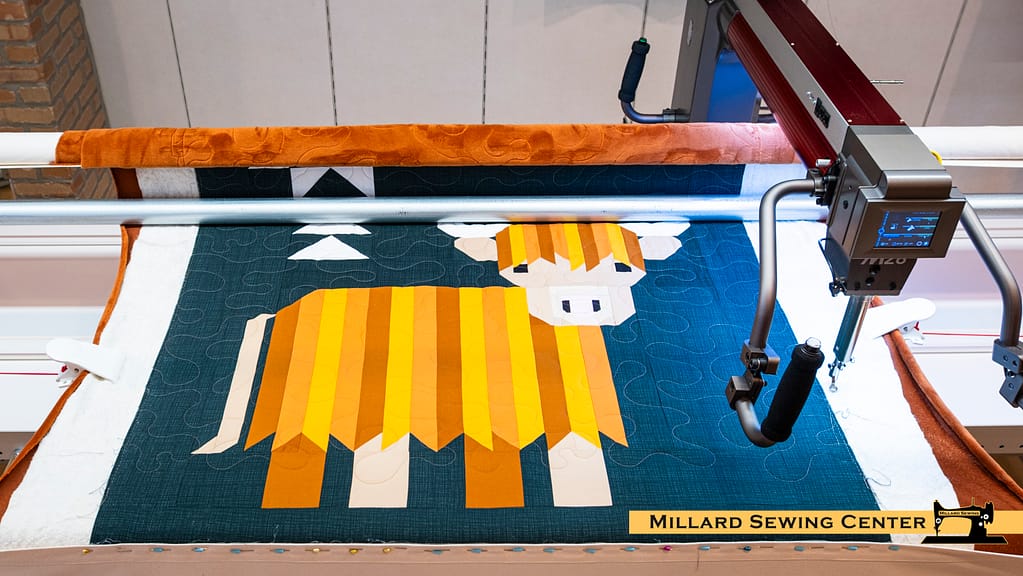
A computerized quilting system allows your longarm machine to automatically stitch quilting designs across your quilt top. Instead of manually guiding the machine through every curve, you can select a pattern, size it to fit your quilt, and allow the system to reproduce that design with consistent placement and pattern accuracy.
Benefits of robotics include:
- Accurate pattern placement and repeatable design execution
- Access to thousands of quilting patterns
- Reduced physical fatigue during long quilting sessions
- Faster completion times
- Easier edge-to-edge quilting
- Improved productivity for quilting businesses
- Greater confidence for newer longarm owners
Many quilters initially purchase robotics for simple edge-to-edge quilting, but later discover they use it for custom borders, blocks, sashing designs, and creative layouts that would have been difficult or time-consuming to stitch manually.
Understanding Your Automation Options
Not every quilter needs full robotics on day one. Modern longarm systems offer several different levels of automation.
Pantographs
Traditional Pantographs
Traditional pantographs use printed paper patterns placed behind the machine. The quilter follows the pattern manually using a laser or stylus.
This remains a popular and affordable option, but requires practice and operator attention throughout the quilting process.
vs
PantoVision by Innova
PantoVision is a unique system that bridges the gap between traditional pantographs and full robotics.
Instead of following a paper pantograph, the design is displayed digitally on a screen at the front of the machine. The quilter still guides the machine manually, but benefits from digital pattern management and a more convenient workflow.
PantoVision is ideal for quilters who enjoy controlling the machine themselves but want a more modern alternative to paper pantographs.
Full Robotics
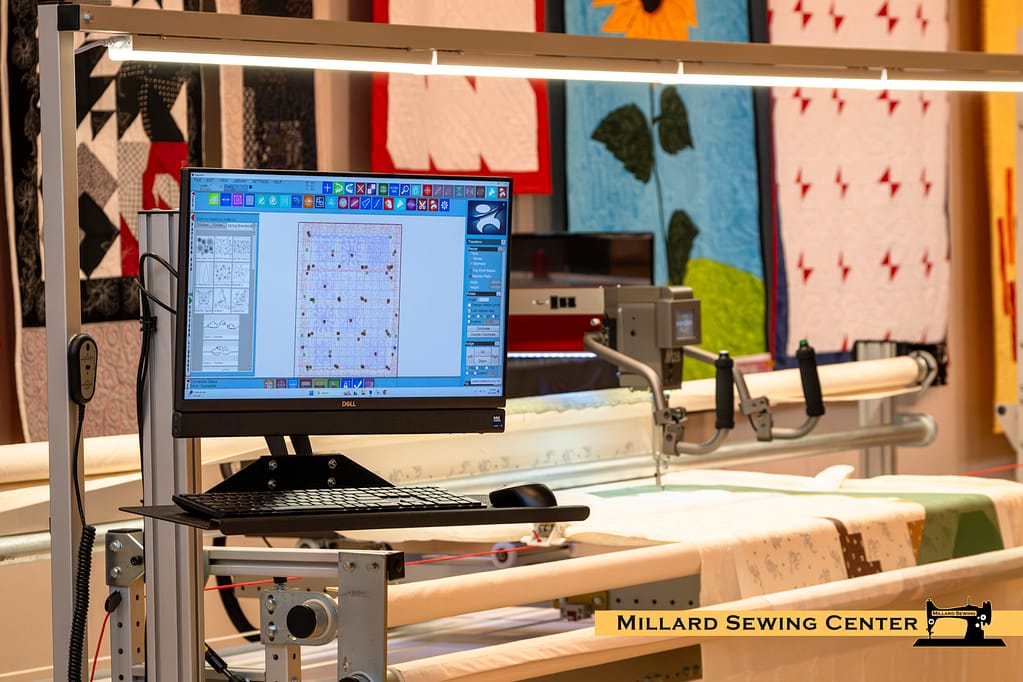
Robotic systems use motors and software to move the machine automatically. Once the pattern has been positioned and configured, the machine stitches the design with minimal operator involvement.
This is the level most quilters think of when discussing computerized quilting systems.
Janome Pro-Stitcher Lite
Pro Stitcher Lite is available on select Janome longarm models and provides an approachable introduction to computerized quilting.
Designed with simplicity in mind, Pro-Stitcher Lite focuses on making robotics easy to learn and easy to use.
Best suited for:
- New longarm owners
- Hobby quilters
- Edge-to-edge quilting
- Users looking for straightforward operation
- The touchscreen-based interface helps keep the learning curve manageable while still providing access to computerized quilting capabilities.
Janome Pro-Stitcher Premium
Pro-Stitcher Premium expands on the Lite platform with additional design and editing capabilities.
For quilters who want more control over pattern placement, customization, and quilt layout options, Pro-Stitcher Premium provides a more advanced quilting environment while maintaining the familiar touchscreen workflow.
Best suited for:
- Experienced hobby quilters
- Frequent longarm users
- Customers seeking additional customization tools
- Quilters ready to move beyond basic edge-to-edge quilting
Innova AutoPilot Mach 3
AutoPilot Mach 3 is Innova‘s full-featured robotics platform.
Rather than relying on a tablet-style interface, AutoPilot uses a full Windows computer with keyboard, mouse, and touch screen monitor controls. This provides access to advanced editing tools, pattern management capabilities, and workflow options that appeal to serious hobbyists and quilting businesses alike.
AutoPilot is designed for quilters who want maximum flexibility and room to grow.
Best suited for:
- High-volume quilters
- Quilting businesses
- Advanced custom quilting
- Power users who want maximum control
User Interface & Design Workspace
One of the biggest differences between the Janome and Innova robotics platforms is the way the systems are operated. Both systems allow quilters to select, size, position, and stitch quilting designs, but they approach the task differently.
Janome Pro-Stitcher uses a machine mounted touchscreen tablet-style interface that emphasizes simplicity and ease of use.
Innova AutoPilot uses a full Windows computer with a touch screen monitor and the traditional keyboard + mouse controls, providing a familiar desktop-style environment for advanced editing and project management.
The difference becomes most noticeable when working with larger or more detailed projects. A larger screen provides more room to view layouts, adjust design placement, manage multiple patterns, and work with advanced quilting and embroidery features. For quilters who spend significant time designing rather than simply stitching edge-to-edge patterns, the AutoPilot workstation can offer a more comfortable and efficient experience.
The Mechanics Behind The Robotics
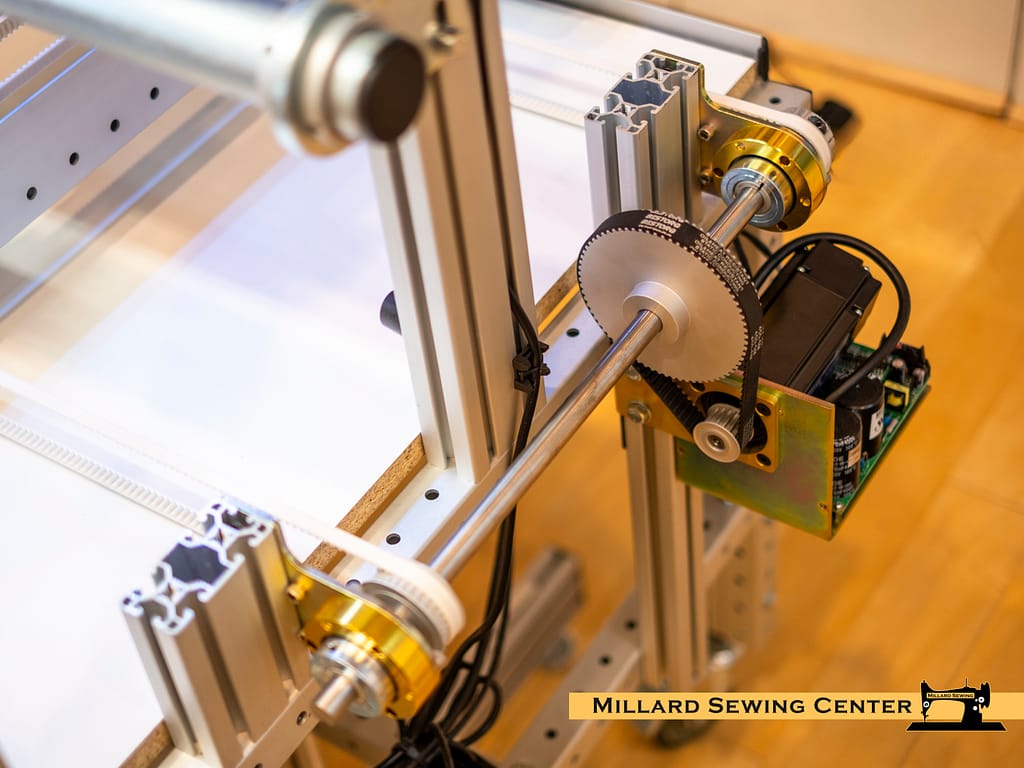
The screen and software are the parts most shoppers notice first, but the real difference between robotics systems is often hidden in the drive system, motors, belts, positioning, and motion control.
A robotics system has to know where the machine is, where the design needs to go, and how to move the machine accurately through that path. The more demanding the design becomes, the more important that motion system becomes.
This is one reason the Innova AutoPilot motor system is physically larger than many compact robotics systems. AutoPilot is built around a more industrial-style drive system designed for accuracy, durability, and advanced quilting functions.
Stitch Regulation vs Motor Positioning
Most longarm robotics systems move the machine while the stitch regulator controls stitch length. That works well for many quilting designs, especially edge-to-edge quilting.
AutoPilot combines industrial motion control with precise motor positioning rather than relying exclusively on traditional stitch-regulation feedback for stitch placement.
For everyday quilting, the difference may not matter on every design. But when you start working with geometric patterns, sharp corners, dense quilting, embroidery-style designs, or precision layouts, the mechanics behind the system become much more important.
Beyond Robotics: Grand Format Embroidery
One feature that makes the Innova ecosystem unique is Grand Format Embroidery.
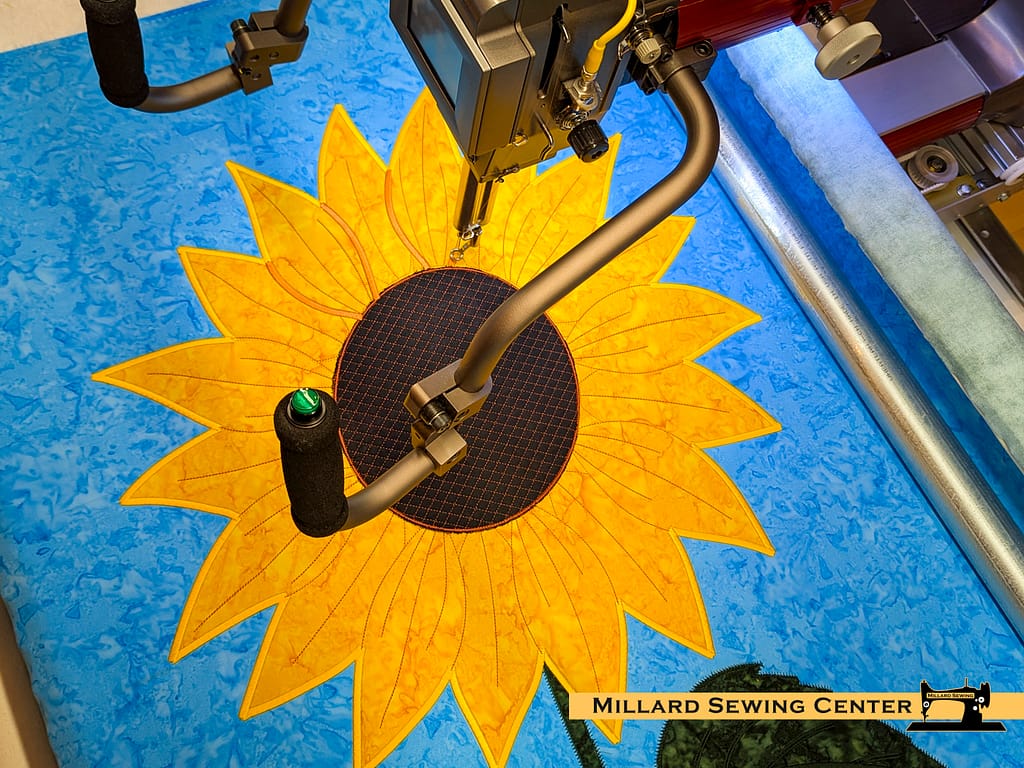
Grand Format Embroidery transforms an Innova longarm into a giant embroidery system capable of stitching oversized embroidery designs that would be impossible on most conventional embroidery machines.
This is not simply a software trick. Embroidery-style stitching requires accurate placement, repeatability, and motion control beyond what normal edge-to-edge quilting demands.
For quilters, crafters, apparel decorators, and business owners, this opens opportunities far beyond traditional quilting.
Which System Is Right For You?
Choosing the right robotics system depends on your quilting goals, experience level, preferred workflow, and long-term plans. Some quilters want the simplest path into computerized quilting, while others are looking for advanced editing tools, business capabilities, or room to grow into future technologies.
The chart below highlights which system may be the best fit based on your quilting priorities.
| If You Want… | Best Fit |
|---|---|
| Learn robotics with the simplest workflow possible | Pro-Stitcher Lite |
| Edge-to-edge quilting with minimal learning curve | Pro-Stitcher Lite |
| More editing and customization tools on a Janome platform | Pro-Stitcher Premium |
| Advanced quilt layout control and design flexibility | Pro-Stitcher Premium |
| Maximum screen space and editing workspace | AutoPilot Mach 3 |
| Industrial-grade motion control and positioning accuracy | AutoPilot Mach 3 |
| Grand Format Embroidery capability | AutoPilot Mach 3 |
| Room to grow into a quilting business | AutoPilot Mach 3 |
| Digital pantographs without full robotics | PantoVision |
| Traditional hands-on quilting with digital assistance | PantoVision |
| Future growth into advanced quilting technologies | AutoPilot Mach 3 |
Hopefully this guide has helped you better understand the differences between today’s longarm automation options.
The best system isn’t necessarily the most advanced—it’s the one that matches your quilting style, experience level, budget, and long-term goals. A hobby quilter finishing a few quilts each year may have very different needs than someone planning to quilt professionally or explore advanced features such as Grand Format Embroidery.
If you’re still unsure which system fits your needs, the best next step is to see them in person. At Millard Sewing Center, you can compare longarm machines, robotics options, and automation levels side-by-side so you can choose the system that feels right for both your current projects and your future quilting goals.
Recommended Next Steps
Keep moving with the next guide, class, or supply category.