
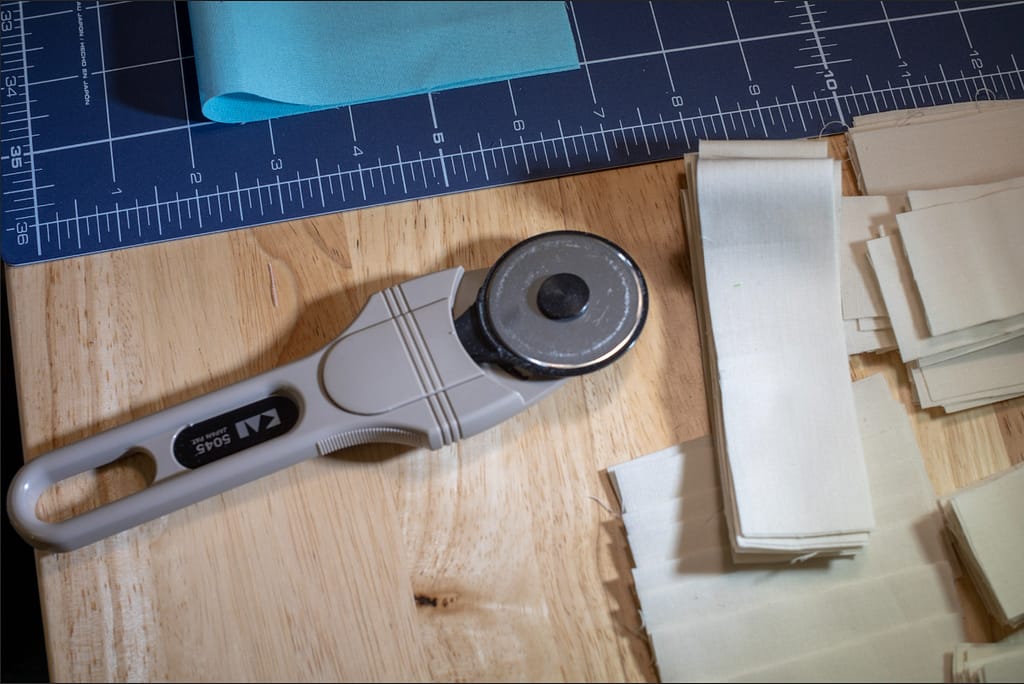
Learn how to safely and accurately use rotary cutters, rulers, and cutting mats for quilting and sewing projects.
Rotary Cutting Makes Quilting Faster And More Accurate
Rotary cutting is one of the biggest differences between quilting and traditional garment sewing. Instead of cutting fabric pieces individually with scissors, quilters often use rotary cutters, rulers, and cutting mats to cut multiple accurate pieces quickly.
Learning the basics of rotary cutting early can save time, improve accuracy, and reduce frustration while piecing quilt blocks together.
Beginner Tip
Sharp rotary blades cut best with light pressure. Pushing too hard can cause slipping, uneven cuts, or damaged rulers.
What You Need For Rotary Cutting
Most beginner rotary cutting setups include three main tools.
- Rotary cutter
- Self-healing cutting mat
- Quilting ruler
These tools work together to help cut straight, repeatable fabric pieces.
Rotary Cutter
A rotary cutter uses a circular blade that rolls through fabric. Many beginners start with a 45mm rotary cutter because it works well for general quilting and fabric cutting.
Self-Healing Cutting Mat
Cutting mats protect tables and help rotary blades stay sharp longer. Grid markings on the mat also help line up fabric and rulers accurately.
Quilting Rulers
Quilting rulers are thick acrylic rulers with measurement markings designed specifically for rotary cutting. They help create straight lines, squares, strips, and accurate quilt pieces.
Rotary Cutting Safety Basics
Rotary cutters are extremely sharp and should always be handled carefully.
Safety Reminder
Always close or cover the blade immediately after cutting. Even experienced quilters can accidentally brush against an exposed blade.
Keep Fingers Away From The Blade
When holding rulers, keep fingers away from ruler edges and cutting paths.
Replace Dull Blades
Dull blades require more pressure and can slip while cutting. Fresh blades usually cut cleaner and safer.
Use A Stable Surface
Rotary cutting works best on large, stable tables with enough room to support fabric and rulers comfortably.
Common Beginner Rotary Cutting Mistakes
Most rotary cutting frustrations come from rushing or skipping alignment steps.
Common Beginner Mistake
Many beginners focus only on ruler measurements while forgetting to straighten the fabric itself first. Crooked fabric can create inaccurate cuts even when ruler measurements look correct.
Using Too Much Pressure
Heavy pressure can cause rulers to shift and cuts to become uneven.
Not Squaring Fabric First
Before cutting strips or shapes, fabric should usually be folded and squared properly.
Trying To Cut Too Many Layers
Beginners often get more accurate results cutting fewer fabric layers at a time.
Building Confidence With Rotary Cutting
Rotary cutting feels awkward for many beginners at first, but it becomes much easier with practice. Start with simple strip cuts and basic quilting projects before moving into more advanced shapes and precision piecing.
Accurate cutting helps quilting projects come together more smoothly and can make sewing much more enjoyable overall.
Related Resources
Helpful pages to keep learning.
Where To Go Next
Recommended Next Steps