
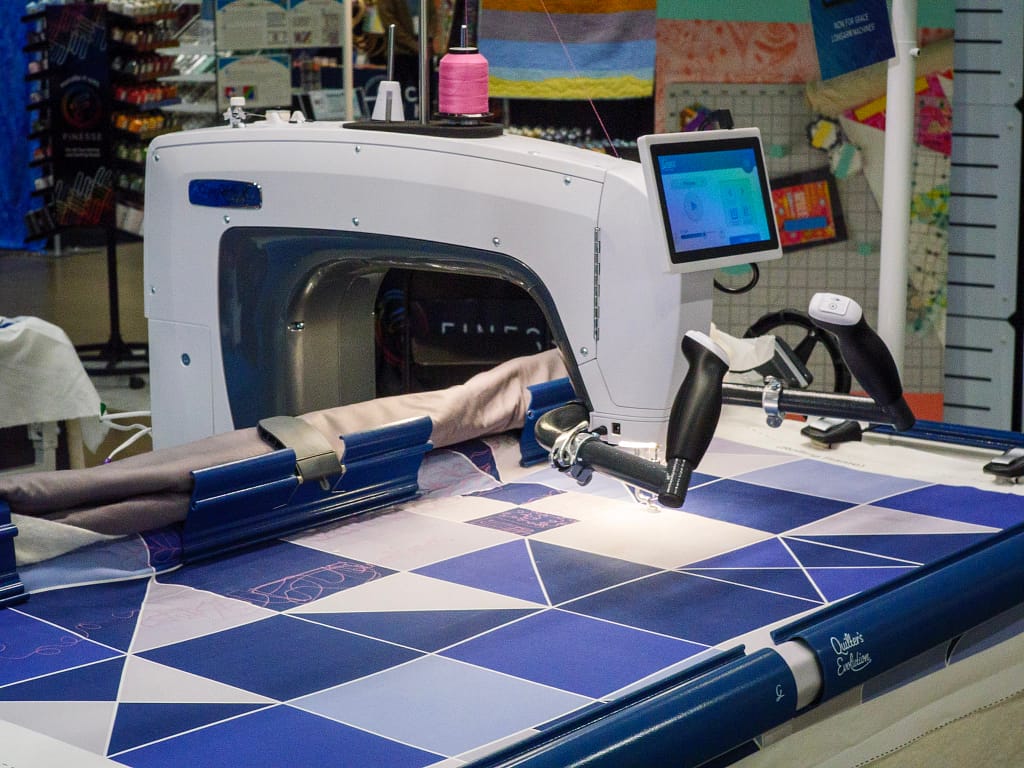
Big quilting doesn't always require a big frame. Hoop frames make it possible to quilt projects much larger than the frame itself by working in sections, giving quilters another option when a traditional full-size frame simply doesn't fit their space.
HOOP FRAME QUILTING EXPLAINED
Big Quilting Doesn’t Always Require a Big Frame
One of the first questions people ask when they see a hoop quilting frame is:
How can I quilt a large quilt on a frame that small?
The answer is surprisingly simple. Instead of keeping the entire quilt stretched
across a full-size frame, you work on one section of the quilt at a time. Quilt the
area available to you, reposition the quilt, and continue into the next section.
This approach is often called zone quilting.
Hoop frames trade some continuous working area for something many quilters don’t
have enough of: space. Understanding that tradeoff is the key to
deciding whether a hoop frame or a traditional full-size quilting frame makes more
sense for you.
Hoop Frames, Zone Quilting & Full-Size Frames
These terms describe two different ways of managing the same thing: a quilt
that’s much larger than the area you’re actively quilting.
Hoop Frame
A compact quilting frame that holds the portion of the quilt you’re currently
working on. When that area is finished, you reposition the quilt and continue.
Zone Quilting
The process of quilting a project in manageable sections or “zones.” Finish
one working area, move the quilt, and begin the next.
Full-Size Frame
A larger frame that keeps more of the quilt loaded and gives you a wider
continuous quilting area before the quilt needs to be advanced.
Hoop Frame vs. Full-Size Frame
Both setups can handle large quilts. The biggest difference is how much of the
quilt you can work on before repositioning or advancing it.

A compact working area. Quilt one section, reposition the quilt,
and continue into the next zone.

A larger continuous working area. More of the quilt stays loaded
while you quilt across a wider section before advancing it.
Imagine Painting a Mural on a Ceiling
THE LADDER
Think Hoop Frame
If you’re painting the ceiling in a small room, you might bring in a ladder.
Climb up, paint everything you can comfortably reach, climb down, move the
ladder, and continue.
The ladder doesn’t limit the size of the ceiling you can paint. A larger room
simply means you’ll reposition the ladder more often.
THE SCAFFOLDING
Think Full-Size Frame
Now imagine painting a huge ceiling. You could keep moving that same ladder,
but eventually scaffolding starts looking pretty appealing.
It takes more room and more effort to set up, but once it’s there you can move
across a much larger working area without constantly stopping to reposition.
Neither one determines how big your masterpiece can be.
It changes how you move through the project.
But What If You’re Painting a Mural?
Room size isn’t the only reason you might choose scaffolding.
Imagine painting an elaborate ceiling mural with long lines and details that
need to flow continuously from one area to another. Even in a smaller room,
scaffolding might make the job easier because you can see and work across more
of the design at once.
Quilting presents the same choice.
A quilting design made from relatively independent motifs or an all-over
pattern may be very comfortable to complete one zone at a time. A design with
long sweeping elements, extensive side-to-side movement, or areas where you
want to see a larger portion of the design at once may benefit from the larger
working area of a full-size frame.
How Zone Quilting Works
The quilt can be much larger than the frame because only the section you’re
currently quilting needs to be inside the working area.
Position
Place the quilt so the area you want to work on is secured within the
frame’s quilting zone.
Quilt
Quilt everything you want to complete within the available working area.
Reposition
Release and move the quilt so the next unquilted section enters the
working area.
Continue
Repeat the process zone by zone until you’ve worked your way through
the entire quilt.

With zone quilting, only the portion you’re actively quilting needs to be
positioned inside the frame. When that section is finished, reposition the
quilt and continue.
Hoop Frame or Full-Size Frame?
There isn’t one right answer. You’re choosing which tradeoffs make the most
sense for your quilting, your projects, and your room.
A HOOP FRAME MAY FIT YOU IF…
You’d Rather Save Space
- You don’t have room for a traditional full-length quilting frame.
- You want to keep more of your sewing room available for other uses.
- You don’t mind repositioning the quilt as you work.
- Your quilting style works comfortably in smaller sections.
- You want frame quilting without dedicating a large portion of a room to it.
A FULL-SIZE FRAME MAY FIT YOU IF…
You’d Rather Save Repositioning
- You have dedicated space available for a larger frame.
- You regularly quilt larger projects.
- You want a larger continuous working area.
- Your quilting designs benefit from long, uninterrupted movement.
- You prefer advancing the quilt rather than repeatedly repositioning it.
Choose the Frame That Fits the Way You Quilt
There isn’t one right frame for every quilter. A hoop frame gives up some
continuous working area in exchange for a smaller footprint, while a full-size
frame gives you more room to quilt before advancing the project.
The better choice depends on your space, the designs you like to quilt,
and how you prefer to work.
Recommended Next Steps
Keep moving with the next guide, class, or supply category.