
What sets batik fabrics apart and how to shop for it.
Batik and other hand-dyed fabrics are a showcase of craftsmanship and design knowledge, as using them properly allows you to add intricate patterns and high contrast into your projects. The bright colors, intricate designs, and uniqueness from each bolt is what makes batik fabric stand out in your projects.
What Makes Batiks Unique?
There are many differences between printed fabrics and these hand-dyed fabrics.
1. Dye Patterns
Each bolt, yard, and inch of batik fabric is different from the rest. The process in which these fabrics are created create room for dye to naturally spread and seep into the fabric, creating the iconic patterns these fabrics are praised for.
2. One-of-a-Kind
Due to the slight inconsistencies you may find between bolts, some people prefer shopping in person. Feeling the fabric and seeing the designs and way the color presents itself up close can help choose the right fabric for your next project. Consider purchasing more off of a single bolt if color consistency is necessary for your project.
3. Texture
When shopping or feeling hand-dyed fabrics in person, you’ll notice the texture is unique from other cottons. Batiks are started with a tighter woven cotton, as the dye proceeds to sink into the fabric, creating a result of a smooth feel to the fabric.
Batik & Hand-Dyed Highlight


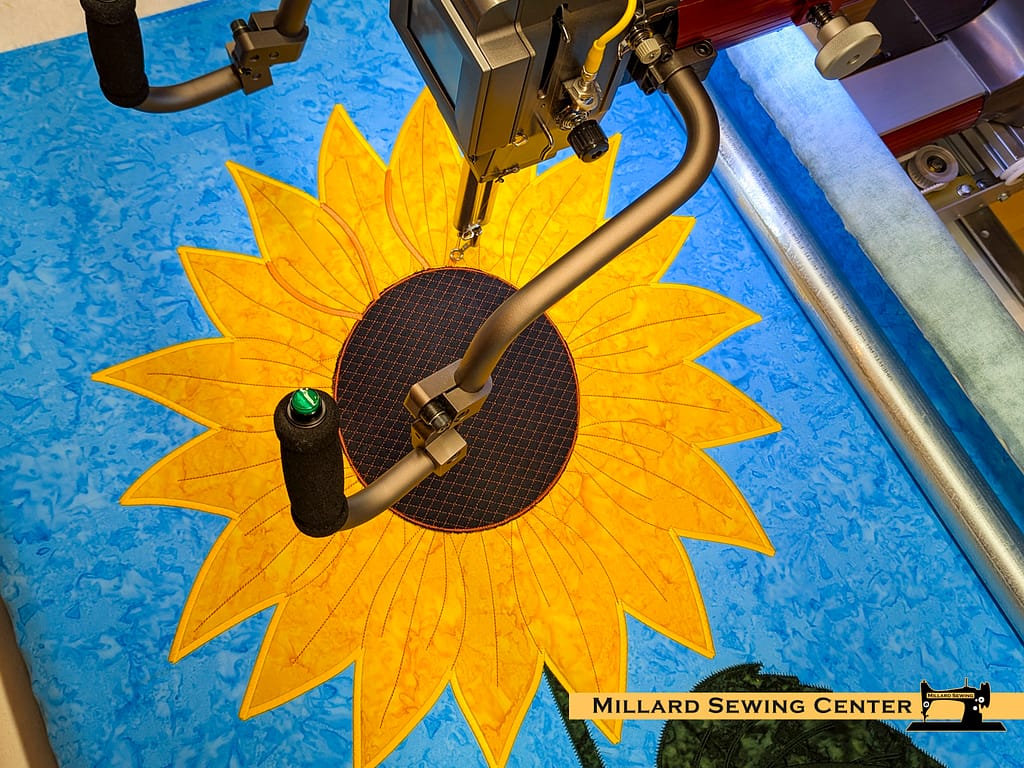
Batik fabric offers a one of a kind color, texture, and pattern to your future projects. We’ve chosen Riley Blake’s Hand-Dyed fabrics for our Sunflower quilt, and the design highlights the bright colors and details you’ll find using other batik and hand-dyed fabrics for your own projects.
There is much more to learn about this amazing type of fabric. We’re here to answer your questions about the creation, washing and caring, and completion of projects using batik fabric.
How are Batiks Created?
Batik fabrics are created through a hand-dyeing process called wax resist dyeing. In this process, there are multiple steps to create the patterns and colors seen in most batik fabrics. First, wax is applied by hand or stamped onto a tight woven cotton. The wax is what defines where the dye will be applied. However, the small threads of dye that makes batik fabric iconic is caused by slight cracking in the wax as the fabric is set into the dye. Those small cracks create the one of a kind look every batik has, so across each yard, no inch is the same as another. The fabric may go through a single round of dyeing, or may receive multiple rounds. The look of the fabric changes depending on whether the wax is reapplied, or if the color of the dye is changed. These decisions separate batik fabrics from the consistency of machine printed cottons. Once the long dyeing process is finished, the fabric is thoroughly washed to remove excess wax and dyes.
How to Care for Batiks and Hand-Dyed Fabrics
Batik and other hand-dyed fabrics do not have much difference in care over other cotton fabrics. Depending on your preference, prewashing in the machine or washing with gentle soaps can be beneficial to remove any dye residue. As the process of creating batiks include multiple rounds of dyeing, the fabric has the potential to bleed or transfer onto light colored fabrics. While it is up to personal preference, prewashing can give that extra peace of mind.
Storing batik fabric is not as strict. As with storing most fabrics, avoid direct sunlight or places where water may come in contact. Storing in a tote or neatly folded can protect the fabric from fading, especially as the pattern and intensity of the colors makes batik fabric iconic.
Can You Mix Batiks and Other Cotton?
Batiks and traditional cotton fabrics can absolutely be used together. Using a batik fabric alongside basic or patterned cotton fabric can bring visual contrast and interest to your project. The bright colors and intricate patterns make viewing or using projects interesting whether seeing it from across the room or holding the fabric in your hands. Consider using batik fabrics for piecing and appliques, where the color and pattern will pop!
Shopping for Batiks
Batik fabric, as you now know, are iconic for their unique patterns and coloring from being hand dyed that causes each bolt to have slight differences. If the exact pattern and hue are important, shopping in person is likely the best option. If shopping online, avoid “stock images” that are advertising all of their batik fabrics. By purchasing from retailers who have candid photos of the fabric on the bolt or folded, you can get a much more accurate representation of the exact fabric you will receive.
Why Do Batiks Cost More?
It is not strange to find batik fabrics at a different price than your other cotton fabrics. Unlike traditional cotton fabrics, which can be printed easier with the use of modern day technology, the use of the age-old process requires craftsmanship, dye and wax handling, and much more care to create the fabric. The more complex or dye heavy result only means more labor was used to create it. This skilled art results in a priceless, intricate look that you won’t receive among modern cotton fabric.