
There are a lot of different types of thread to choose from, and if you have questions about what the differences between them are, then you’re in the right place. We’re here to help you choose the best thread for your next project.

Thread Weight
Thread weight is determined by dividing a length of thread by a set weight. A thread is labeled 40 wt. when 40 kilometers of that thread weighs 1 kilogram. The higher the number, the finer the thread. A 100wt. thread like Allure by Filtec is going to be very fine, while a 12wt. such as Aurifloss would be more like hand embroidery floss.
When choosing thread, the most common weight you’re probably going to see would be a 40wt. or 50wt. When it comes to piecing, a good 50wt. thread like Aurifil is popular. For machine embroidery, we prefer 40wt. Glide or Aurifil thread with 60wt. Glide on the bobbin. With a finer thread on the bottom, the top thread is pulled to the underside of the fabric, ensuring that the bobbin thread is not visible in the embroidery. For extra fine detailed work, you can use 60wt. like Glide or 100wt. thread, like Filtec’s Allure thread.
Thread Tex
If you take a closer look at the bottom of a spool of the BNT, or Bonded Nylon Thread by Filtec, you will see “Tex 70.” Tex is calculated by using the thread weight in grams of 1,000 meters of thread. So, with the BNT thread, 1,000 meters weighs 70 grams. With thread tex, the higher the number, the heavier the thread.
Fiber
When you’re choosing a thread for your project you generally want to choose a thread that’s made from the same fiber as the fabric that you’re working with. For cotton fabric you would want a cotton thread, and for polyester fabric, you would want a polyester thread. There are a few reasons for this, but the main reasons are that you want your fabric and thread to have the same strength and shrink rate. Cotton thread and fabric will shrink when it’s washed, and polyester won’t. So, if you sew a polyester garment with cotton thread, your seams may pucker after they’ve been washed. If you sew a cotton garment with polyester, seams can ripple after being washed. If your fabric is a blend of fibers, choose a thread that matches the fiber with the highest percentage in your fabric.
When it comes to quilting, most of the quilts out there are going to be made of cotton. There are some exceptions, like if you’re making a quilt out of recycled garments, for example. Generally most quilts are made of cotton, though. For this reason you’re going to want to choose a cotton thread for piecing. Aurifil 50 wt. is hands down the most popular thread we sell to quilters. There are other options as well, such as Cairo Quilt, which is a 50 wt. cotton thread, or Harmony, which is a 40 wt. variegated cotton thread. Both Cairo Quilt and Harmony are made in the USA by Filtec.
For stitching out your quilting, there is some controversy out there on the topic of cotton vs. polyester. Some will argue that polyester is a stronger thread and therefore better suited for holding your quilt’s layers together. Others will only use cotton thread, so that their quilts are made of 100% cotton. To help you make a decision when choosing which thread to use for quilting, here are some of the facts of cotton vs. polyester:
- Polyester thread is going to be much stronger than a cotton thread of the same weight. So, 60wt. polyester is going to be better suited for quilting than a 60wt. cotton, if you’re looking for a finer thread for your quilting.
- Cotton will shrink at the same rate as your batting, backing, and quilt top. Polyester thread will not shrink. If you pre-wash your fabrics, they will not shrink, but your batting shouldn’t be pre-washed.
- Cotton thread is more expensive than polyester thread. This may not be a deciding factor for everyone, but it’s something that can be taken into consideration for some quilters. Most long arm machines will handle polyester threads like Glide or MaxiLock with out issues.
- Cotton is going to give off more lint than polyester. Cotton fibers come in various lengths, depending on the kind of cotton plant that the fibers came from. Shorter cotton fibers are used to make lower quality threads, which will give off a lot more lint than a high quality cotton thread like Aurifil, which is made from long-staple Egyptian cotton and has been mercerized to burn off excess lint. Polyester fibers are long continuous fibers, which makes for a lower lint thread. Lower lint threads are going to keep your machine cleaner and require less maintenance.
Machine/Spool Type
There are different types of thread spools, and depending on how the thread was wound on the spool, you may have issues with tension if the thread is not coming of of the spool properly. When you look at thread on the spool, if it is wound around the spool in even rows, like Coats & Clark, for example, you can use it on either a vertical or horizontal spool pin. For threads like Aurifil, Glide, MaxiLock or Mettler, the threads are cross-wound on the spool, the thread will need to come off of the end of the spool. This means that these threads will only work with either a horizontal spool pin or with a thread stand. For cones of thread, some of the higher end household machines will be able to handle a cone of thread or two, but for most household machines you will need a thread stand to use cones with your machine.

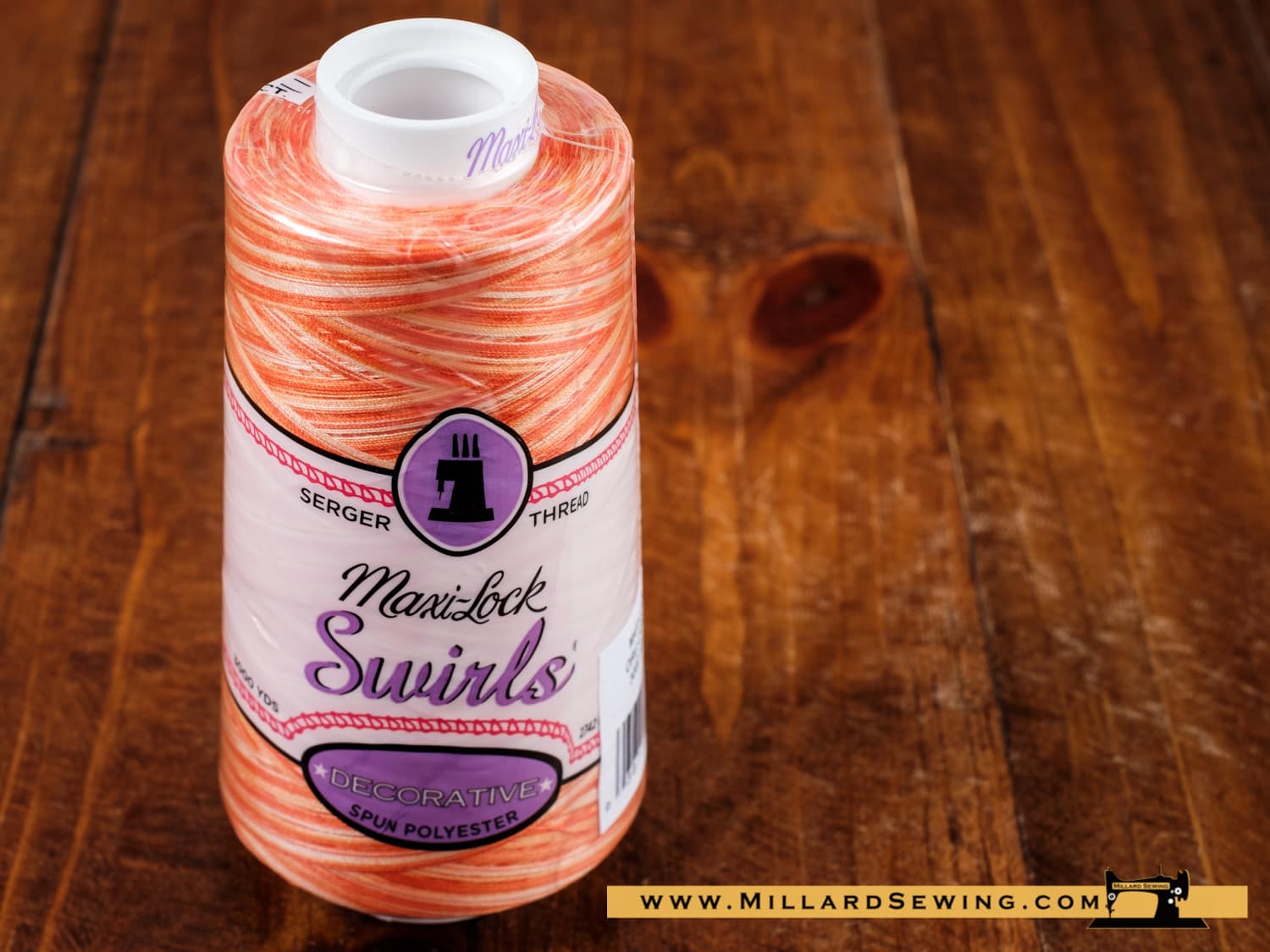
Check out all of our thread here and find the ideal thread for your next project!
Discover more from Millard Sewing Center
Subscribe to get the latest posts sent to your email.